Fashion Got Smart. Did It Leave Women Behind?
You used to need cheekbones to belong in fashion. Now you need a bibliography.
By Aliya Hollub
March 2026
You used to need cheekbones to belong in fashion. Now you need a bibliography.
To understand what Jonathan Anderson is doing at Dior, you need to have done the reading. Dracula and Les Fleurs du Mal embroidered directly onto the clothes. Show notes steeped in queer literature and Symbolist poetry to evoke a melancholic, cinematic Paris. A greenhouse in the Tuileries positioned in direct conversation with Monet’s Water Lilies. All of it: the painting, the literature, the film, the fashion history. Fashion has always borrowed from culture. It has never before made cultural fluency the price of admission.
Anderson is not alone in this.
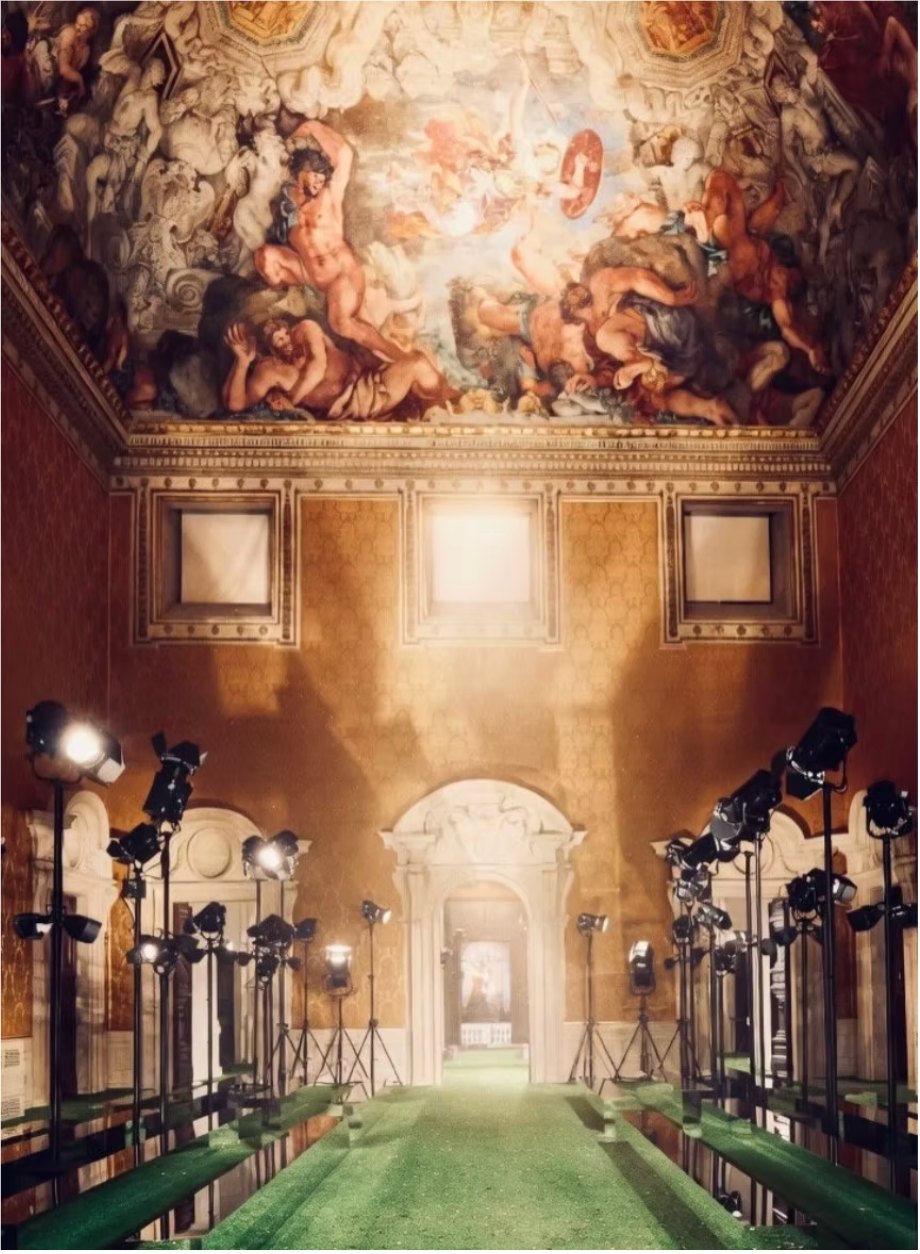
Alessandro Michele’s Valentino FW 2026, titled Interferenze, a study in contrast and convergence, staged at the Palazzo Barberini in Rome, built by Bernini and Borromini, frescoed by Pietro da Cortona, and never before used as a runway space. Each silhouette a question about what it means to dress the present inside the past, the weight of the 17th century as the frame for identities that could only exist now. The architecture doing exactly what Michele intended: making the tension between structure and spontaneity visible, physical, undeniable. The architecture was not backdrop. It was thesis.
Fashion got smart. The shows got references. The clothes got concepts. And the woman inside them got a new set of requirements she didn’t ask for.
Fashion’s old sin was making women feel inadequate for not being beautiful enough. What we have not yet reckoned with is the new one: making women feel inadequate for not being smart enough.
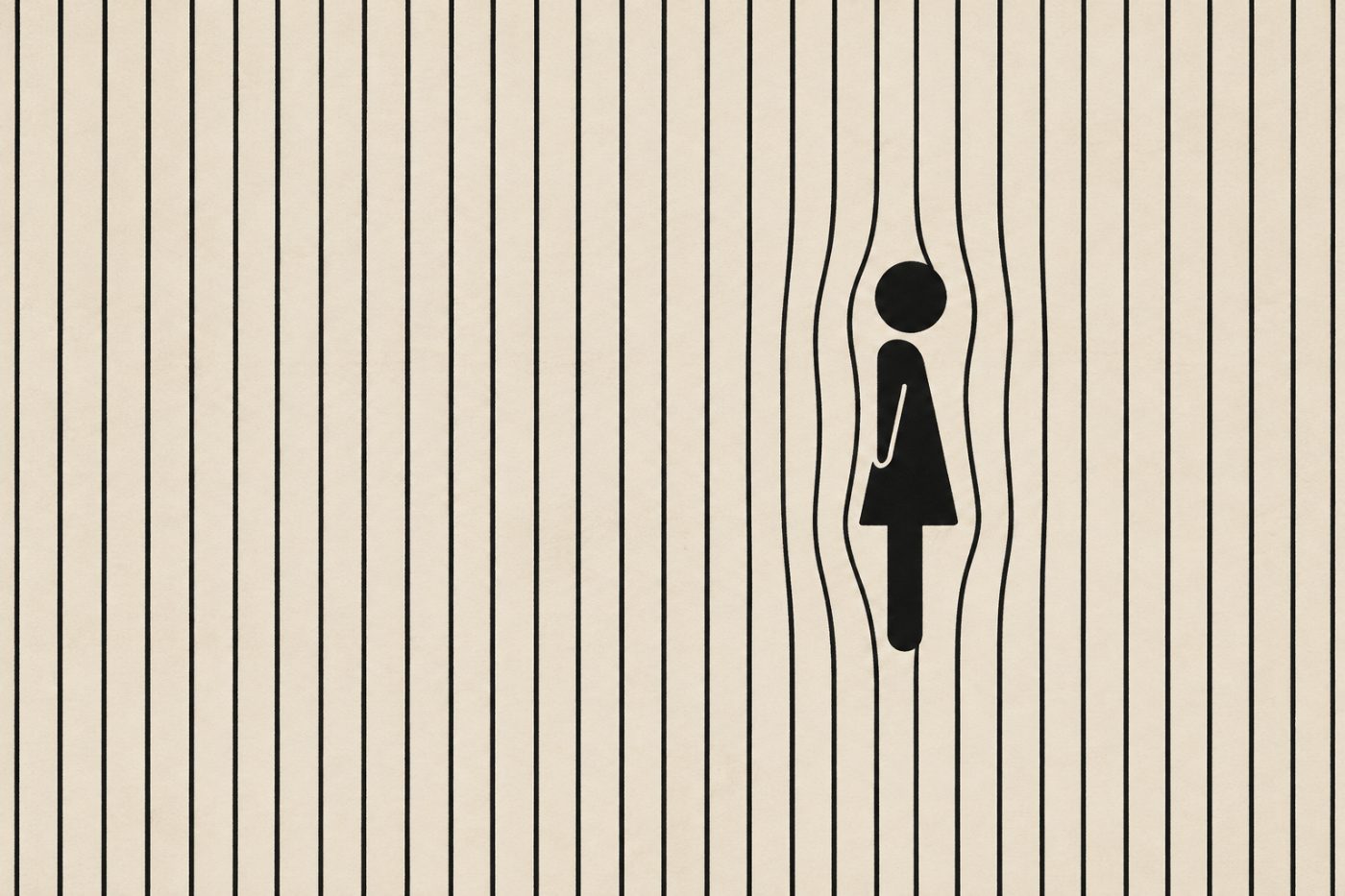
The velvet rope is still there. They just moved it to the library.
At Loewe, he built one of the most critically lauded houses of the decade not by abandoning beauty but by making intelligence its most desirable quality, staging collections alongside work by Anthea Hamilton and Lynda Benglis, treating the runway as a curatorial project as much as a fashion show. As costume designer for Challengers, his “I Told Ya” T-shirt became as talked about as the movie itself: the kind of cultural object that only makes complete sense if you have seen the film, know the JFK Jr. lore it is drawing from, and have spent enough time in the right corners of the internet to understand why it landed the way it did. None of it lands if you haven’t done the work.
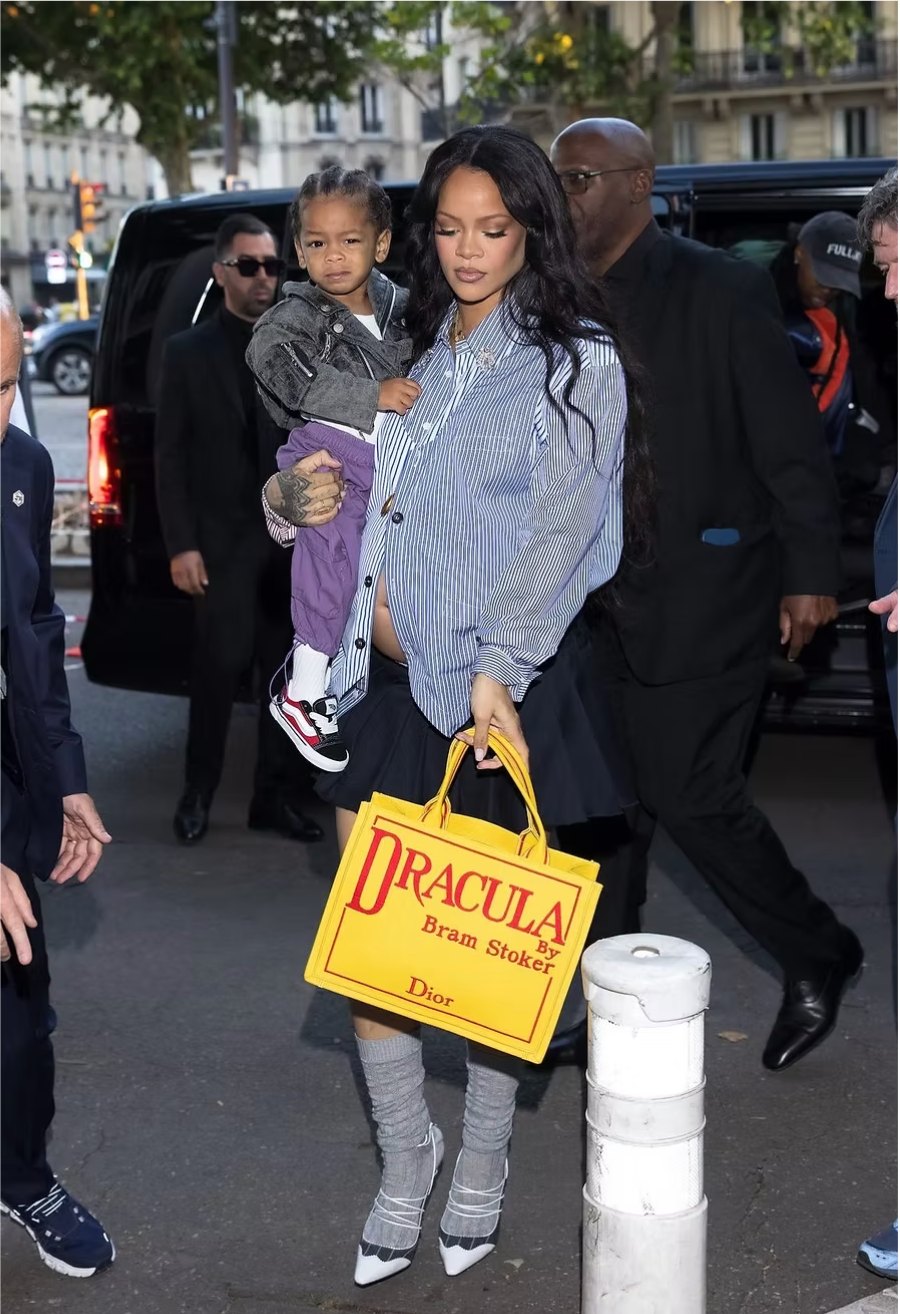
At Dior the ambition has grown. For Summer 2026, Anderson reimagined the iconic Dior Book Tote, a house signature reinterpreted each season, as a direct homage to literary classics: Dracula, Les Fleurs du Mal, Madame Bovary, Ulysses, In Cold Blood, Les Liaisons dangereuses, Bonjour Tristesse. And, inevitably, Dior by Dior. Each title rendered in faithful detail, as if lifted directly from a first edition. The collection extended to T-shirts, scarves, and hoodies: the covers of canonical literature worn on the body, carried on the arm, treated as the season’s most covetable accessory.
The campaign that launched it was shot among the legendary bookstalls along the banks of the Seine. Writers and lovers of literature posed against actual books, on the most literary stretch of the most literary city in the world. Anderson did not reference culture. He staged fashion inside it. And Rihanna was carrying the Dracula tote six months before it reached stores. A woman who built an empire on making the transgressive aspirational got there before the campaign did. Even the bad girl does the reading now.
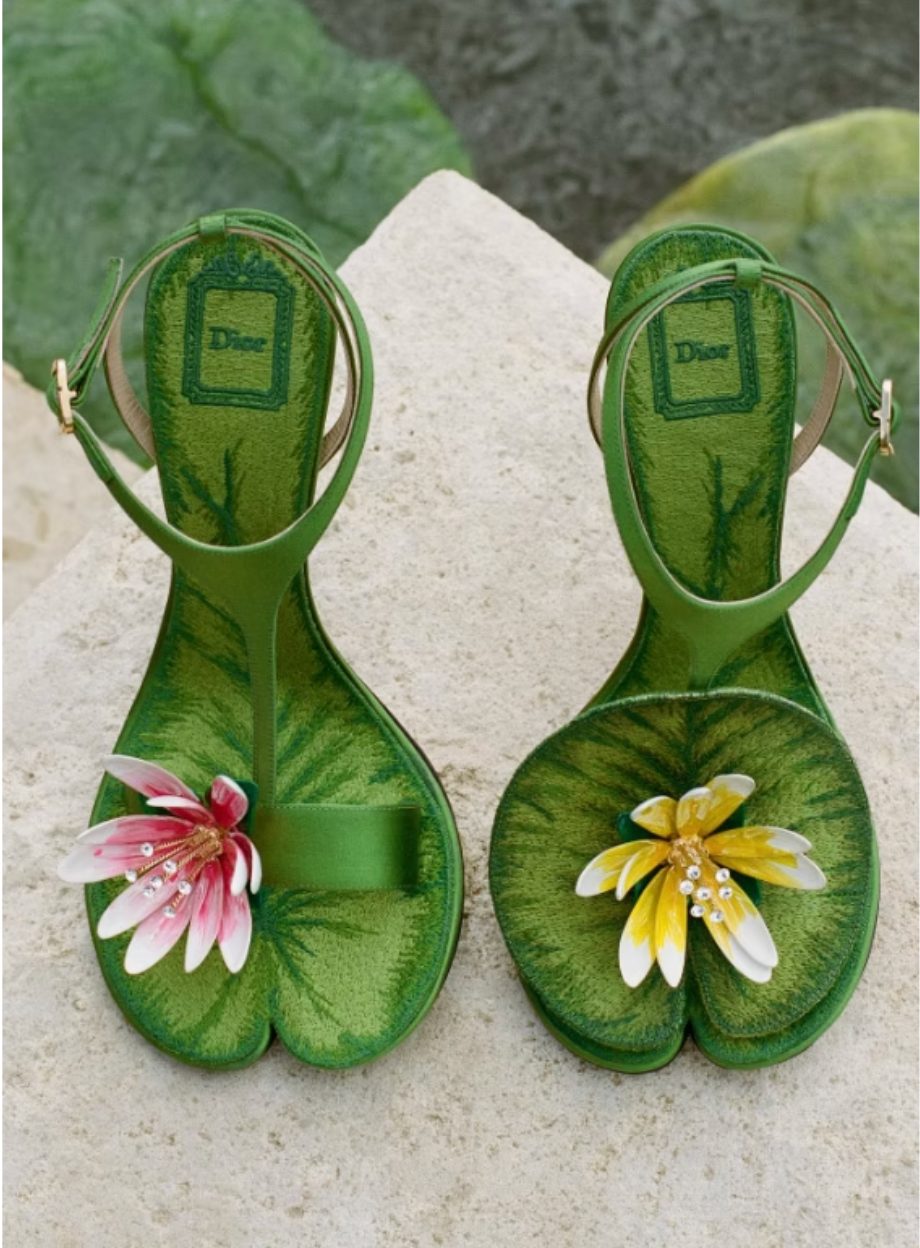
The ambition extends beyond the clothes themselves. For his FW 2026 show, Anderson transformed the Jardin des Tuileries into a Monet-inspired dream: a greenhouse surrounding a pond of water lilies, Monet’s original paintings a few hundred meters away. The show was not staged near culture. It was staged inside a conversation with it. To sit in that greenhouse and understand why you were there, you needed to know your Impressionism.
A Dior customer under Anderson is not aspirational in the old sense. She does not simply want to be desired. She wants to be recognized as someone who reads, who travels to the right museums, who understood the reference before it was explained to her. Which raises the question nobody in the industry seems particularly interested in asking: what happens to the woman who just wanted to get dressed?
The front rows reflect this new cultural ambition more honestly than any press release could. When Mark Zuckerberg appeared front row at Prada in Milan, it was not because he had developed a sudden passion for Italian tailoring. It was a statement of intent: fashion as the room where culture, technology, and power converge, and everyone who matters wants to be seen belonging to it. Front rows are no longer celebrity seating. They are curated like cultural panels, with directors, writers and critics positioned as part of the show’s intellectual framework.
Carolina Herrera FW 2026 made the argument most explicitly. The runway was transformed into an artist’s studio lined with hand-painted murals by Sarah Oliphant, and the women walking it were not models. They were Amy Sherald, who painted Michelle Obama’s official portrait. Ming Smith, pioneering photographer. Rachel Feinstein, sculptor. The show did not reference art. It cast art as the protagonist.
Cultural production (authorship, visibility, institutional credibility) had become the defining language of what fashion considers aspirational in 2026.
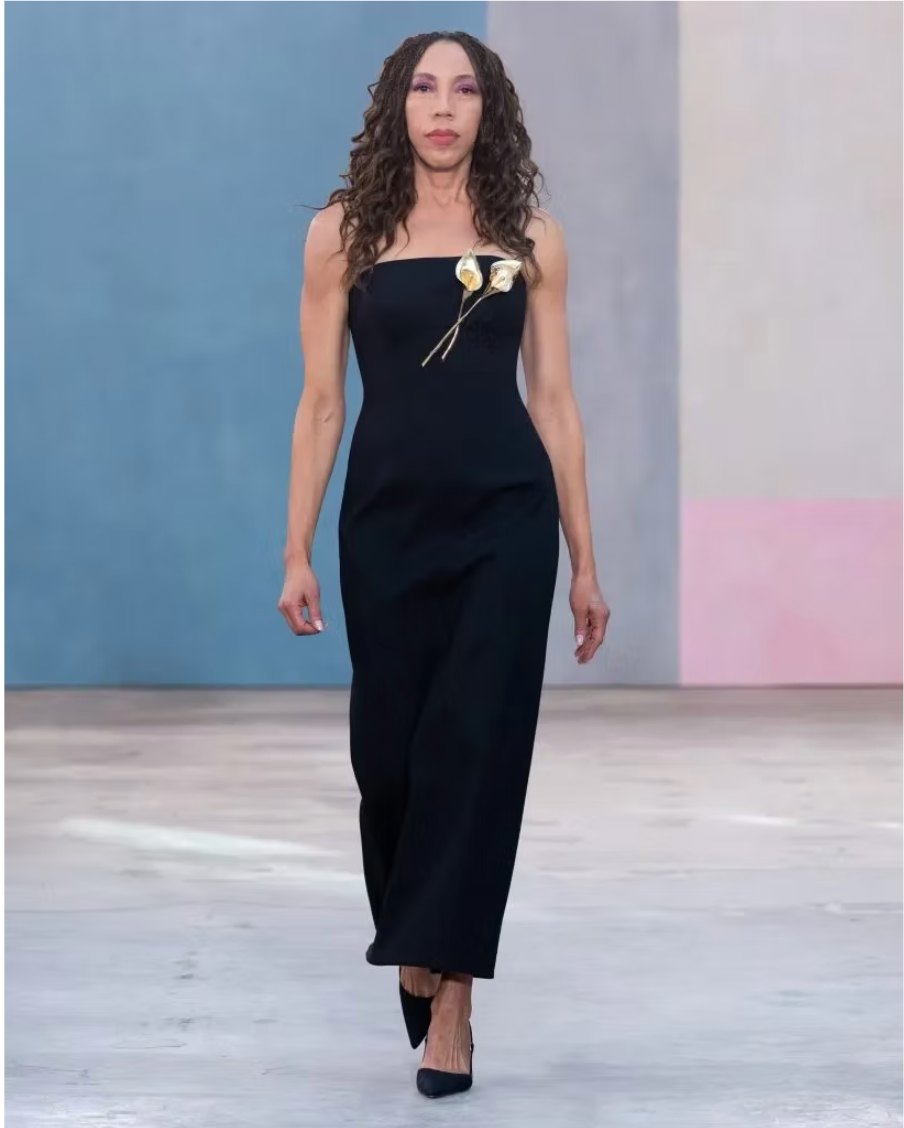
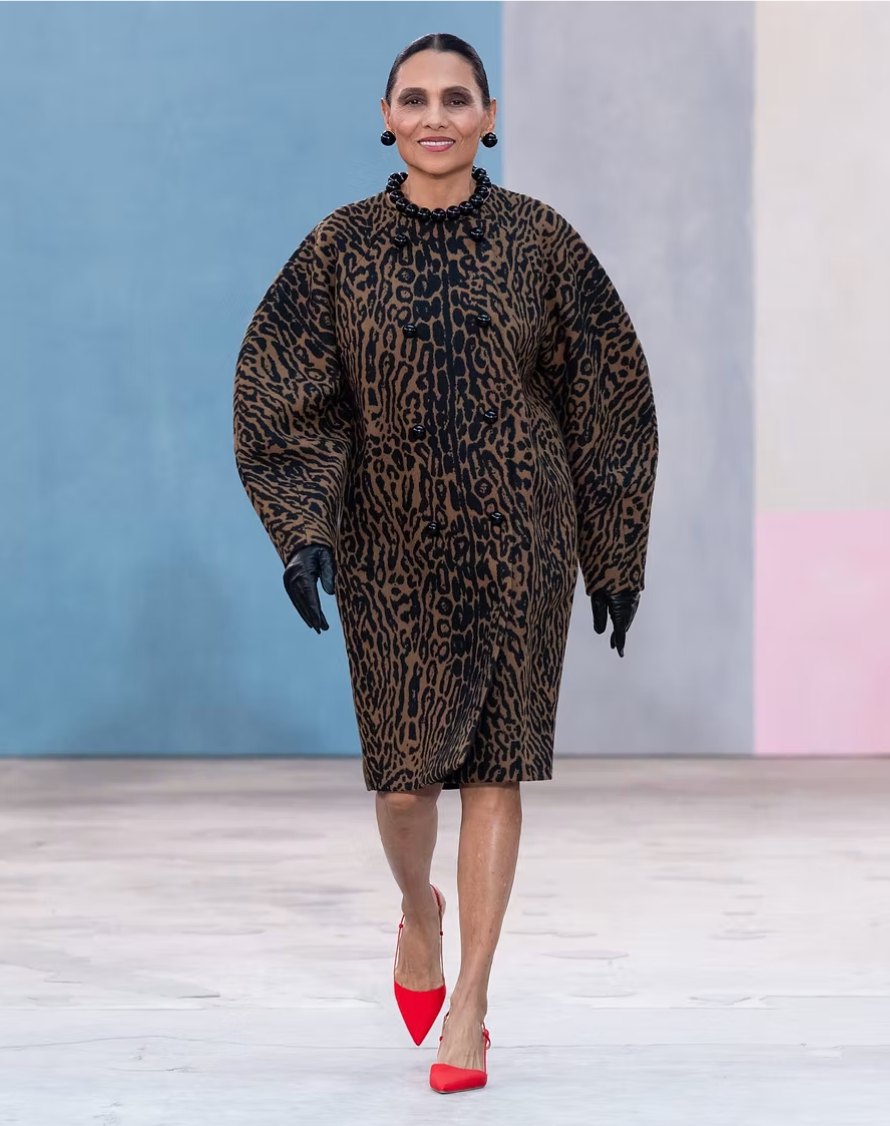
Fashion has stopped inviting the merely beautiful and started courting the genuinely significant.
This is not exclusively a high fashion phenomenon. At every level of the market, the intelligence signal is being sold. Coach, a brand built on accessible American luxury, has perhaps made the argument most literally of all, selling miniature book charms to hang from handbags. Not just any books. I Know Why the Caged Bird Sings by Maya Angelou, rendered in miniature leather, dangling from the arm of a woman who may or may not have read it. The aspiration has trickled all the way down. You don’t have to be able to afford a Loewe puzzle bag to want to signal that you are the kind of woman who gets the reference. You just need a Coach charm and a good Instagram caption.

It is either the most democratic expression of fashion’s intellectual turn or its most cynical one. Possibly both.
Scroll through fashion content on any platform and the dynamic is the same. You can like the image without understanding it, but belonging requires knowing what it means. The aesthetic travels. The meaning is for the initiated.
Anderson’s Dior arrives at a house that has spent the better part of a decade under Maria Grazia Chiuri being explicitly, and sometimes exhaustingly, about women. Their politics, their history, their right to exist in public without being decorative. It was fashion with an argument, and the argument was always her. Anderson’s Dior will probably be more interested in the woman as a vehicle for ideas than as a person with a body and a life and a specific reason for getting dressed. This is not a criticism so much as an observation about what Anderson does. He makes clothes for people who want to be recognized as interesting, as cultured, as the kind of person who gets the reference.
Fashion gave the intellectual woman her due. It created a new dress code for the woman who had always been told that caring about clothes meant she couldn’t possibly care about ideas. And in doing so, it created a new hierarchy just as rigid as the one it replaced. You no longer need to be beautiful to belong. You need to be well-read. You need to have seen the film. You need to have been in the right museum at the right moment, or spent enough time online to absorb the references before they became obvious. You need to have done the work.
Intelligence has become the new beauty standard: equally aspirational, equally exclusionary, and considerably harder to fake. At least with beauty you knew where you stood.
Look at what Miuccia Prada was doing in the mid-nineties. Spring 1996 was avocado, brown and ochre, with geometric patterns inspired by 1970s domestic objects and upholstery. She called the collection Banal Eccentricity. Robin Givhan reviewed it in the Washington Post under the headline “Ugly is in,” describing the greens as “somewhere between shades of slime and mold.” Six months later, every hip designer was putting an ironic spin on classicism. Prada had started something.
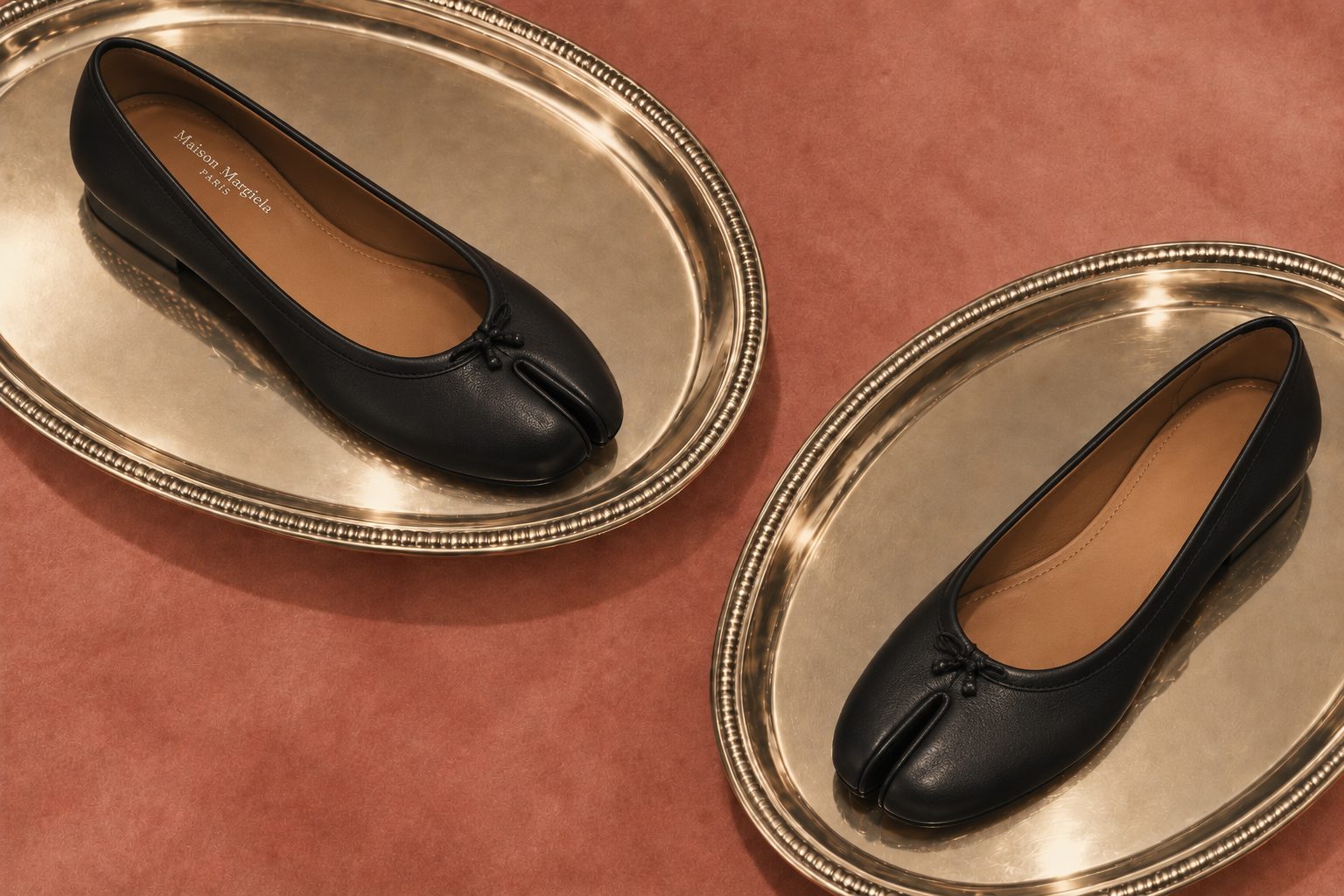
Fall 1996 went further. Khaki, brown and mustard yellow. Structured suiting. Geometric argyle introduced mid-show, each look projecting a quiet, almost corporate solidity that was somehow also completely its own. And the shoes: antiqued leather in various shades of brown, with flower appliqués, judged the ugliest in the world that year and sold out immediately anyway.
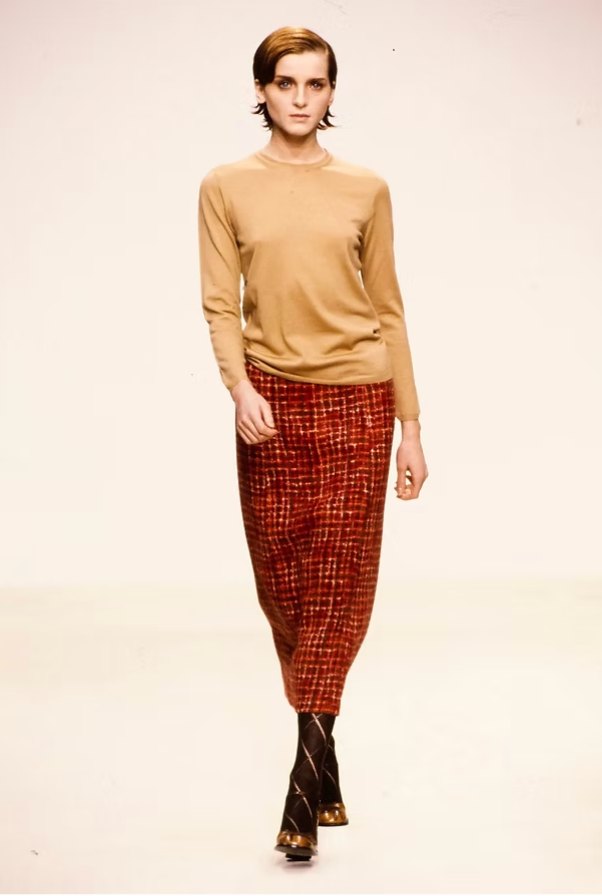
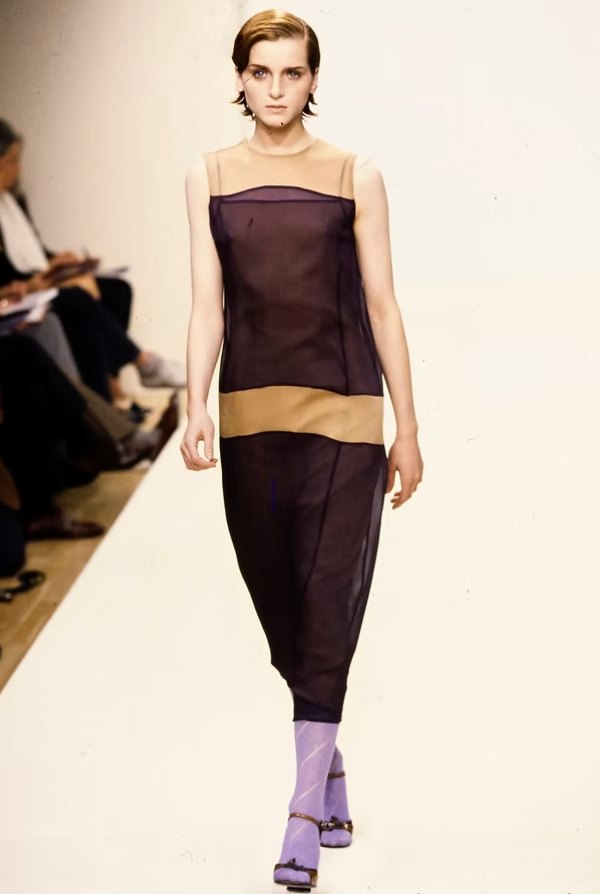
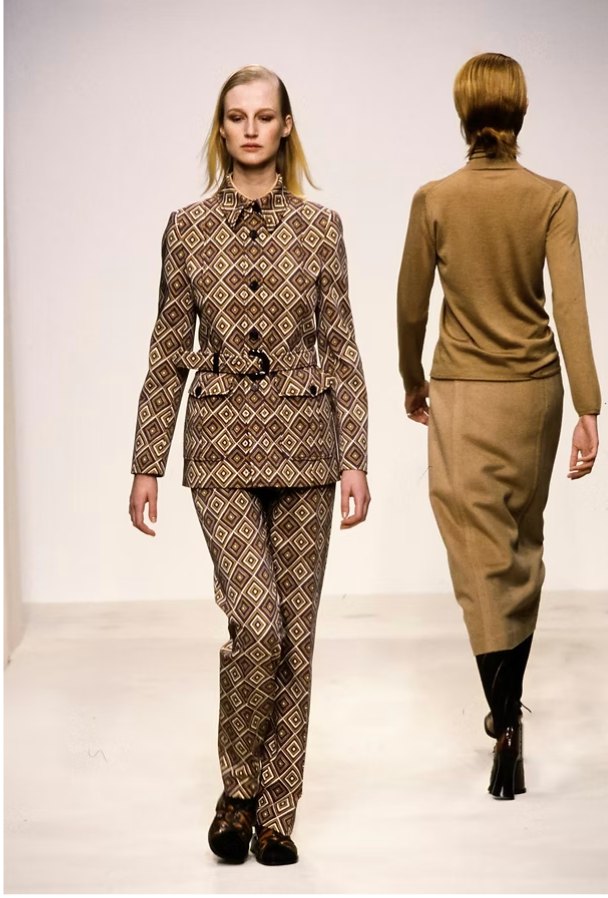
This was intellectually rigorous and deeply conceptual and it was also, unmistakably, about a specific kind of woman. She was awkward and brilliant and slightly difficult and she dressed in a way that announced all of this before she opened her mouth. You could imagine her. You could become her. The concept served the person rather than replacing her. The ugly shoe was not a reference. It was a portrait.
That is the distinction between Prada then and most of what passes for intellectual fashion now. Miuccia used ideas as a tool to illuminate female experience. The concept was the means. The woman was the point.
That inversion, concept as destination and woman as vehicle, is what defines the current moment.
The exceptions exist, and they deserve to be named loudly in an industry that rewards difficulty and forgets warmth the moment a more complicated option presents itself.
Chemena Kamali’s Chloé is a reminder that clothes can carry a philosophy and a woman simultaneously without one consuming the other. The seventies references are not nostalgic. They are specific, grounded in a particular kind of female freedom that feels genuinely present tense. You can see who is wearing these clothes. You can see what she wants, where she is going, what she is going to say when she gets there.
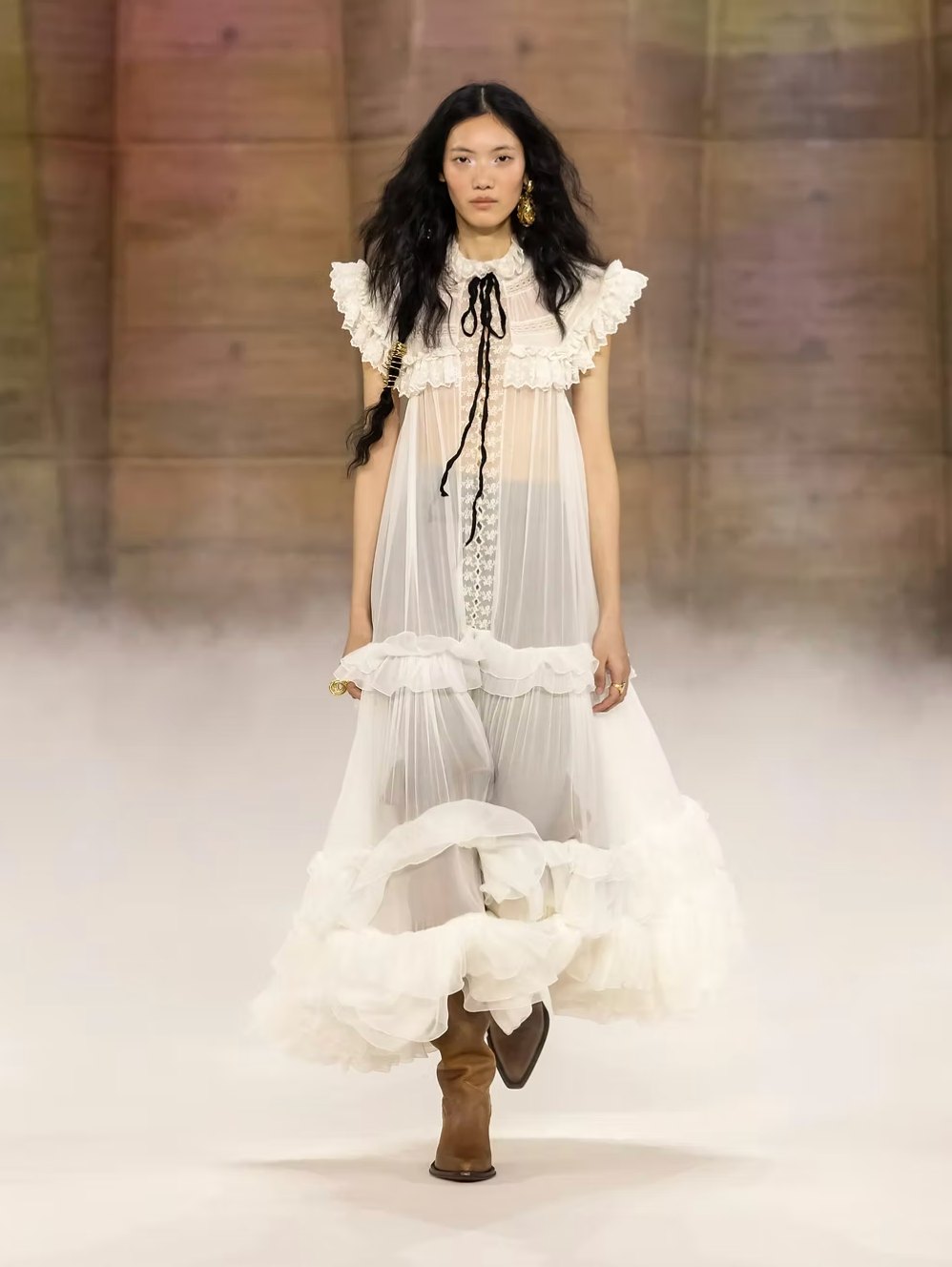
These designers are not anti-intellectual, and they are not making clothes for women who don’t read. They are making the harder argument: that a woman can be brilliant and embodied simultaneously, that desire and ideas are not mutually exclusive, that fashion can be smart without requiring the woman inside it to disappear.
What has been lost in the conceptual turn is not sophistication. Fashion is more intellectually serious than it has ever been, and on balance this is genuinely good. What has been lost is specificity: the sense that a designer sat down and thought carefully about a particular woman, her particular body, her particular desires, and made something that would meet her there rather than asking her to meet the concept somewhere in the middle.
The woman I keep looking for on the runway has opinions about things that aren’t fashion. She gets dressed in the morning for reasons that are sometimes practical and sometimes vain and sometimes just because she found something on the floor that didn’t smell. She is, in other words, a person. Not a concept. Not a thesis statement. Not a cultural reference in a body.
Fashion finally got the respect it always wanted. It got the reading lists and the retrospectives and the critics who take it seriously. It earned its place at the table where serious ideas are discussed.
It just forgot to save her a seat.